
Research team’s provided insights into the rare disease ADSL deficiency.
Written by: Natalie Watson- 20th October 2020
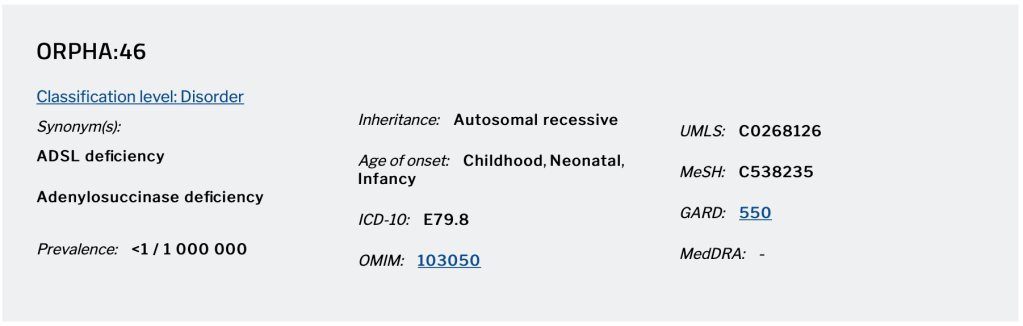
Adenylosuccinate Lyase (ADSL) deficiency is a rare inherited disease of the Purine Metabolism associated with mutations in the ADSL gene. The disease is characterised by different childhood clinical manifestations, mostly affecting the nervous system and, less commonly, the muscular system. This in turn effects the patients both biochemically and behaviourally, the symptoms are variable and often to the degree of the deficiency.
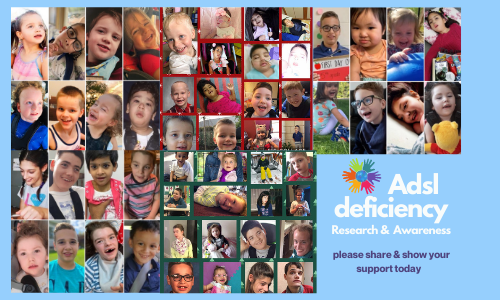
Our children need your help…
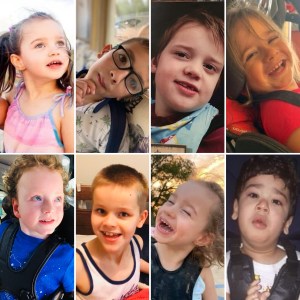
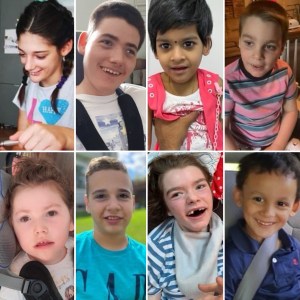
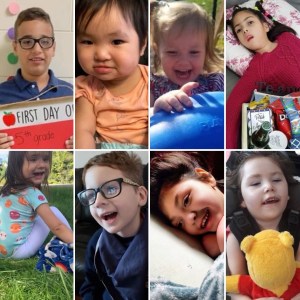
Research has indicated that in most cases the following symptoms are apparent from infancy to early childhood..
- Infantile spasms.
- Unexplained pain/confused like crying episodes.
- Mild to severe developmental delay.
- Psychomotor retardation, Ataxic movement
- Hypotonia
- Joint and/or Limb pain/swelling, possibly related to purine’s in the diet.
- Reduction in eye contact, light gazing, not tracking objects consistently, apparent vision disturbance.
- Cortical Visual Impairment (CVA)
- Autistic behaviours such as rocking, swaying, repetitive movements, self stimming and unnationalised temper tantrums.
- Twitching, jerks and vocal ticks.
- Seizure disorders
The disease can be detected through a ‘Braxton Marshall metabolic urine screen’ as well as an antenatal genetic screening upon request.
Alone we are rare, together we are strong.
Our Mission ….
- To continue funding our dedicated research scientists into the next phases of the AdsL Deficiency research project.
- To continue to raise awareness of the disease through out the world.
- Advocate to find a treatment.
- Advocate to find a cure.
- To continue to educate, connect and support our families on their journey with AdsL deficiency.
- To continue to advocate and seek the answers that will one day prevent another child and their family from the heart breaking effects of this disease.
The Research – Scientific insights into AdsL deficiency.
Over the last 5 years our small group of families have raised in excess of $35,000 to fund research into the disease. We are so grateful to Benedetta Contardi and her 14yr old daughter Carola who has Adsl deficiency. Benedetta has captained most of the fundraising efforts all the way from Rome, Italy and along with Carola has been instrumental in initiating a research team in Rome. I call this research team Carola’s team.
We are currently collaborating with the Italian research team in Italy now researching the AdsL gene to understand why the disease has varied degrees of the deficiency, (mild moderate or severe) and to what degree that impacts on the prognosis of the patient. If we can understand this much about the disease then we will be one step closer to a treatment or even possibly a cure.
There are currently several university’s research teams studying the Adsl gene in detail.
- Prof. Andrea Bartuli – Bambino Gesù Children’s Hospital, IRCCS
- Prof. Cecconi & the team at the University of Rome
- Doctor Matteo Bordi & the team from University of Rome
- Prof. David Patterson & the team from University of Denver
- Prof. Marie Zikánováe, & the team from Charles University Prague
- Also Studys in France.
On behalf of all our families I’d like to say a huge THANK YOU to to all the research Doctors and scientists across the world that have been passionately involved in researching this disease over the years.
Behind the scenes – Finding solace in our collaboration
It can be somewhat comforting to know that even on our worst days of living on the front line of this disease with our children, we are not alone in our search for answers. I have found solace in our collaboration, knowing that we are not alone in our dream of one day we will find a cure, or a treatment that will change the lives of many children. And if we ask the right questions will we find the answers that could possibly save many lives well into the future.

Here are a few of our research teams latest paper – sourced from Molecular Genetics and Metabolism Reports.
Feel free to contact me personally should you require more information in relation to this parent survey or if have other information or medical journals of note to add to this post or if you’d like to help by getting involved in this legacy project and continue to support our research and fundraising teams into the future.
click here to view the full article
 Love's state of mind
Leave a comment